Waiting on Wednesday: Lola and the Boy Next Door

Title: Lola and the Boy Next Door
Author: Stephanie Perkins
Publisher: Dutton Books
Pages: 384
Release Date: September 29, 2011
In this companion novel to Anna and the French Kiss, two teens discover that true love may be closer than they think
For budding costume designer Lola Nolan, the more outrageous, the outfit – more sparkly, more fun, more wild – the better. But even though Lola’s style is outrageous, she’s a devoted daughter and friend with some big plans for the future. And everything is pretty perfect (right down to her hot rocker boyfriend) until the dreaded Bell twins move back into the house next door.
When the family returns and Cricket – a gifted inventor and engineer – steps out from his twin sister’s shadow and back into Lola’s life, she must finally reconcile a lifetime of feelings for the boy next door.–Goodreads
So, this is going to sound terrible, but I wasn’t necessarily super-interested in this book until a couple days ago. Don’t get me wrong–I really like Stephanie Perkins as a writer, and I really enjoyed Anna and the French Kiss, but for some reason, the jacket copy of this didn’t grab me.
And then I read Stephanie Perkins recent blog post about this book. To quote the Q& A-style post,
“Exactly how tall IS Étienne?
My lips are sealed. But, yes, I assure you that he’s shorter than Anna. I had a great joke that revealed his height in Lola and the Boy Next Door, but I cut it due to pacing issues. Maybe you’ll see the joke in Isla and the Happily Ever After? Hmm . . .
Also, YES, that means what you think it means. If you’re thinking it.”
Top Ten Tuesday: It’s All About the Setting

For this week’s Top Ten Tuesday, the lovely ladies at The Broke and The Bookish have us contemplating setting–all of the real or imaginary places we’ve loved reading about.
In no particular order, here are the first ten settings from novels that popped into my head when pondering this list:

1. Hogwarts (Harry Potter series)
It’s a castle. With paintings that speak to you. And secret rooms that have requirements. And staircases that change their layouts. And turrets. It’s just SO COOL.
2. Gallagher Academy for Exceptional Young Women (Gallagher Girls series)
I want to go to spy school. Real bad.

3. Pemberley (Pride and Prejudice)
It’s grand. It’s opulent. It houses Mr. Darcy. It could be a freakin’ shack, and if Mr. Darcy lived in it, I would go to there.
4. Any book set in Nineteenth-Century London
Obsessed. It’s sort of an issue. I spend far too much time thinking about nineteenth-century London.
5. Any book set in London
Let’s be honest. If it’s set in London, I’ll read it.

6. Claudia’s Room (Baby-sitter’s Club series)
When I was younger and thoroughly obsessed with this series (I definitely wrote fan letters to Ann M. Martin) I thought Claudia’s room was just the best place ever. It seemed so comfy and warm and inviting. And there were always snacks.
7. Cassie Clare’s New York City (The Mortal Instruments series)
I think the way Cassandra Clare uses New York City is brilliant. Not only does she capitalize on real places in the city as set pieces, but she changes your perception of them. Never again will I go to Central Park and think of the pond as just a pond.
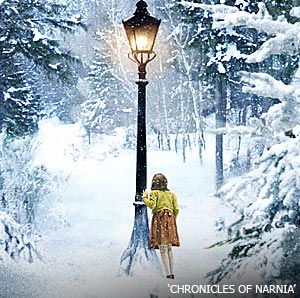
8. Narnia (The Chronicles of Narnia series)
I was sooo in love with these books as a kid. I should probably re-read them. But I remember being so struck by the detail of the world C.S. Lewis created that I would find myself writing short stories where I would make up characters that would find the wardrobe in present day and climb through to find Narnia. Yeah. I did that.
9. Radar’s House (Paper Towns)
This is maybe the most awesome, most hysterical, most random set piece in a book EVER. I love it. I love John Green for thinking of it. And I really hope that somewhere, Radar’s house exists.
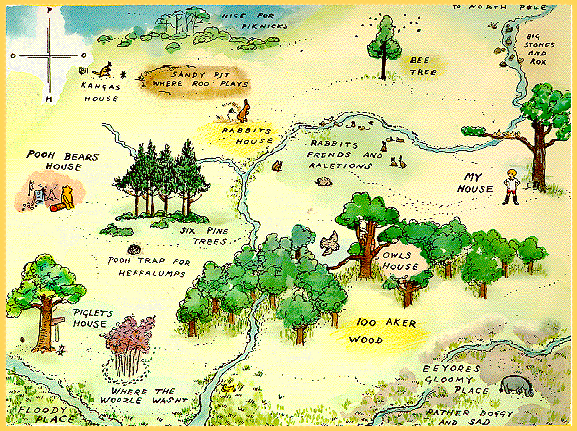
10. The Hundred Acre Wood (The Adventures of Winnie the Pooh)
This is basically the happiest place I can think of. And there’s a new Winnie the Pooh MOVIE coming out NEXT MONTH! Wheeeeee!
Bonus: I’ve always thought it’d be fun to have characters from one very particular genre of book be placed into another very different genre of book–like taking the characters from Pride and Prejudice and dropping them into Middle Earth or something. I guess that’s more of a mash-up type of thing, and that it probably exists somewhere, but I definitely think it’d be fun to read.
Did I miss your favorite setting? Let me know what it is in comments!
YA Saves: A Word on the Importance of YA Novels
In a recent Wall Street Journal article titled “Darkness Too Visible” Meghan Cox Gurdon tackles the question of “Is YA fiction too dark?” She cites real life examples of how parents in various places have walked into book stores or libraries looking to buy or check out a book for their teenagers, only to leave without a pick, or becoming upset by the cover images they find because they think that every YA book is either too paranormal or too violent or too profane for their perfect children to read.
While Gurdon presents her opinion in a well-thought out, well-worded way, she obviously only looked at one YA shelf in her local book store. I know for a fact that the Barnes & Noble in Elmsford, NY, which I visit weekly, has a shelf with a sign over it that reads “Tough Stuff for Teens,” and holds many of the novels Ms. Gurdon references in her article. Right next to the Tough Stuff shelf, is another with a sign that reads “Teen Paranormal.” Then, across an aisle are the REST of the YA novels, from The Hunger Games to The Gallgher Girls to The Mortal Instruments to single titles, some much thematically heavy than others.
While I was reading the article that has offended many YA authors and readers, enough so to start a Twitter hashtag that reads “YAsaves” and features hundreds of stories of those who have turned to YA novels in times of need, or for a boost of self-confidence, or who learned that life is better than they think it is because of a YA book they read, I thought to myself, “If I had kids, would I react in the same way that these parents are reacting to some YA books?”
While I’d love to say that I would be a parent who allows their kids to read anything they want, I think there are some books out there that I absolutely wouldn’t let my younger teen read. Not that I wouldn’t EVER let them read it, I just would want them to wait until they are a little more mature, or have begun to form their own ideas and opinion on certain topics. However. That is a decision that needs to be made by PARENTS on a book-by-book and kid-by-kid basis.
For example, when I was 15, I read The Perks of Being a Wallflower. I loved it. My 12-year-old sister wanted to read it, so she took it from my bookshelf and started it. Now, even at 15, I discussed what I was reading with my mom. Once she realized my sister was reading it, she FLIPPED OUT, and wanted to take it away from her so she wouldn’t be exposed to some of the themes in the book. However, she didn’t. My mom knew that if she banned my sister from reading that book, she’d only want to read it more.
So she let her finish it, and then sat down with her so they could have a conversation about the more adult themes in the novel. From there, my sister started reading significantly darker and more adult books, like those written by Chuck Palahnuik, and my mom, despite her distaste for them, would do the same thing she did with The Perks of Being a Wallflower. They would discuss the book at hand and how my sister felt about and thought about it. While I realize that not all parents will sit down and do what my mother did, I think that is a BEAUTIFUL way to monitor what your kids are reading.
Anyway. The bottom line is that YA books are important. If they weren’t, Ms. Gurdon wouldn’t have written the article. Teenagers and adults alike flock to YA books because of how they present ideas and situations–they aren’t pretentiously written and they don’t judge their audience. No matter the subject matter or genre of young adult fiction, I’ve found that YA books are the most honest, the most open, and the least biased when it comes to presenting ideas on “tough stuff,” whether it’s homosexuality, suicidal thoughts, dealing with death, or combatting loneliness. I think that it’s wonderful that YA publishers are publishing books that grapple with these types of topics, because they are topics that teenagers a) deal with, and b) are interested in.
In the article, Ms. Gurdon writes,”If books show us the world, teen fiction can be like a hall of fun-house mirrors, constantly reflecting back hideously distorted portrayals of what life is.” What I want to know is, what would Ms. Gurdon like to see YA writers write about? Because if the answer is fluffy stories of how great the world is, and how happy people can be, then she is living a very sheltered and deluded life.

TGIF: Sharing the Love, Book-Style

Wow, it’s already Friday. It’s already June. How did THAT happen?!
Well for this very sneaky first Friday in June, Ginger over at GReads! has asked:

Review: Divergent

Title: Divergent
Author: Veronica Roth
Publisher: Katherine Tegen Books (HarperCollins)
Pages: 487
Release Date: May 3, 2011
In Beatrice Prior’s dystopian Chicago, society is divided into five factions, each dedicated to the cultivation of a particular virtue—Candor (the honest), Abnegation (the selfless), Dauntless (the brave), Amity (the peaceful), and Erudite (the intelligent). On an appointed day of every year, all sixteen-year-olds must select the faction to which they will devote the rest of their lives. For Beatrice, the decision is between staying with her family and being who she really is—she can’t have both. So she makes a choice that surprises everyone, including herself.
During the highly competitive initiation that follows, Beatrice renames herself Tris and struggles to determine who her friends really are—and where, exactly, a romance with a sometimes fascinating, sometimes infuriating boy fits into the life she’s chosen. But Tris also has a secret, one she’s kept hidden from everyone because she’s been warned it can mean death. And as she discovers a growing conflict that threatens to unravel her seemingly perfect society, she also learns that her secret might help her save those she loves . . . or it might destroy her. —Goodreads
Divergent is one of those books that I find hard to review. The prose are clean and simple, the story is perfectly plotted and well-paced, the characters are well-developed, and, well, it’s a great read. Despite the fact that it’s almost 500 pages, I almost read the entire damn thing on a plane. At 6 AM. When I should have been sleeping on the plane so I wasn’t exhausted when I got off the plane. But I made the mistake of reading while waiting for take-off, and then, all of a sudden, I realized we were landing.
It’s that kind of book.
Okay, let’s see. Other than being well-plotted and cleanly written/well-edited, I think what I liked most about the book was, well, Four, the main male character in the book. He’s strong and confident and masculine and smart in the way that only guys who are the kind of guys you want to be a better woman for are. In fact, he might be the most mature male I’ve ever met in a YA novel. He’s steady and sure of himself and, just, a rock. He may not be the most charming or warm or happy, but he is steadfast. That just might be the sexiest quality ever. Anyway, the development of the relationship between Four and Tris, the actual main character, is just the best. It’s slow and a little bit unsettling, but a lotta bit satisfying.
But outside of the one character, y’all, this book is solid. I know I’ve already said it, but it really is one of the best plotted books I’ve ever read. At no point does it feel like it’s lagging or repeating information or using words just to take up space. Every sentence propels the story forward and every detail is purposeful. And the story is pretty good too. 😉
Oh. Another thing. I haven’t really mentioned the AUTHOR yet have I? Well, her name is Veronica Roth, and she is a twenty-two-year-old wunderkind. She’s the kind of person who makes me look at my life and think “I have a Master’s degree in Journalism and a half written novel saved to my computer. WHAT AM I DOING WITH MY LIFE?!” Not that I dislike my life. I really like my life. But. Yeah. The girl is good at writing books.
Okay, time to wrap up!
Overall, this is a book that, despite it’s lengthier-than-normal page count, is a quick read due to its brilliant writing, plotting, and solid characters. I enthusiastically encourage you to read it. But only when you have a day to devote to it, because, I promise, you won’t be able to tear yourself away.




 Bethany Larson